

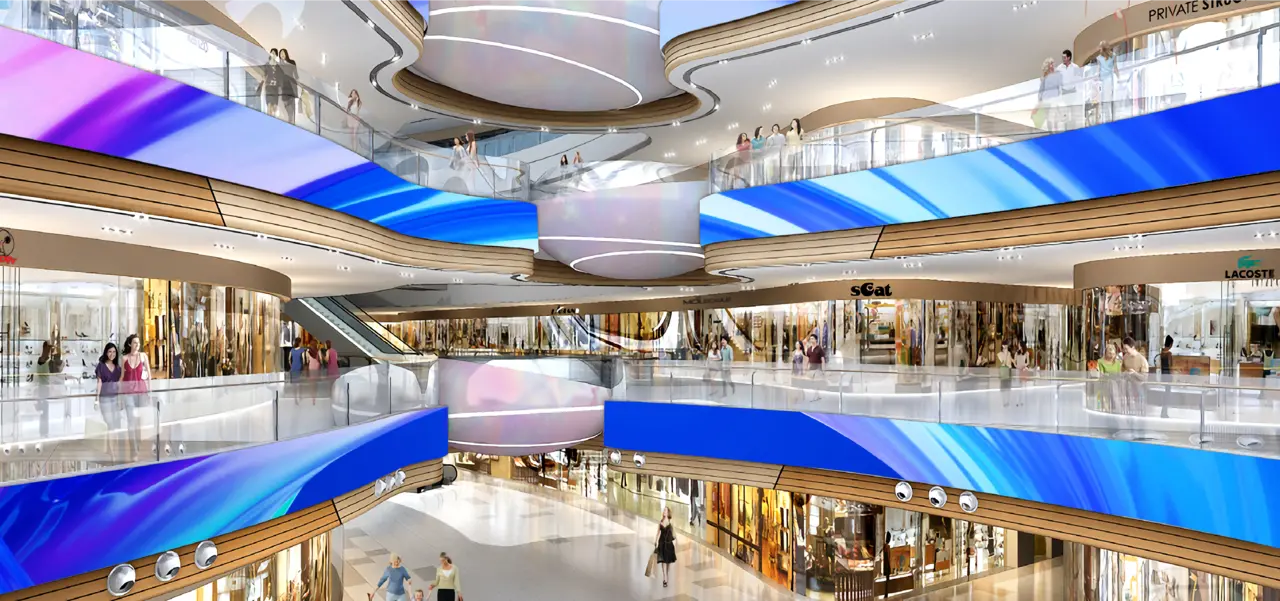
Transparent LED film gets attention because it looks simple: apply it to glass and turn the window into a display. In the right project, it can be a clever solution. In the wrong one, it creates a screen that is too faint, too limited, or too dependent on the glass itself.
Flexible LED screens and transparent film solve different retail problems. Storefront teams should know where each one fits.
Where Transparent Film Makes Sense
Transparent LED film works best when the store wants digital content on glass while keeping some visibility through the window. It can be useful for malls, showrooms, airports, and street-facing retail where the window itself is the display surface.
It is usually lighter than a cabinet-based LED wall and can reduce structural demands. That can be valuable in leased retail spaces where major construction is difficult.
The tradeoff is visual impact. Transparency often comes with compromises in brightness, resolution, viewing angle, or content style. Fine detail and small text may not perform as well as expected.
Where a Flexible LED Screen Works Better
A flexible LED screen may be the better option when the display needs stronger brightness, denser visuals, curved corners, column wraps, or a sculptural in-store feature.
If the design wraps around a pillar, turns a corner, or becomes part of an interior product zone, an indoor creative LED screen may be more suitable than transparent film on glass.
This is especially true for luxury retail and flagship stores where the display is not only signage. It is part of the store architecture.
Content Differences
Transparent film works best with bold visuals, high contrast, and content that does not rely on tiny details. It also has to compete with whatever is behind the glass: mannequins, daylight, interior lighting, reflections, and passing traffic.
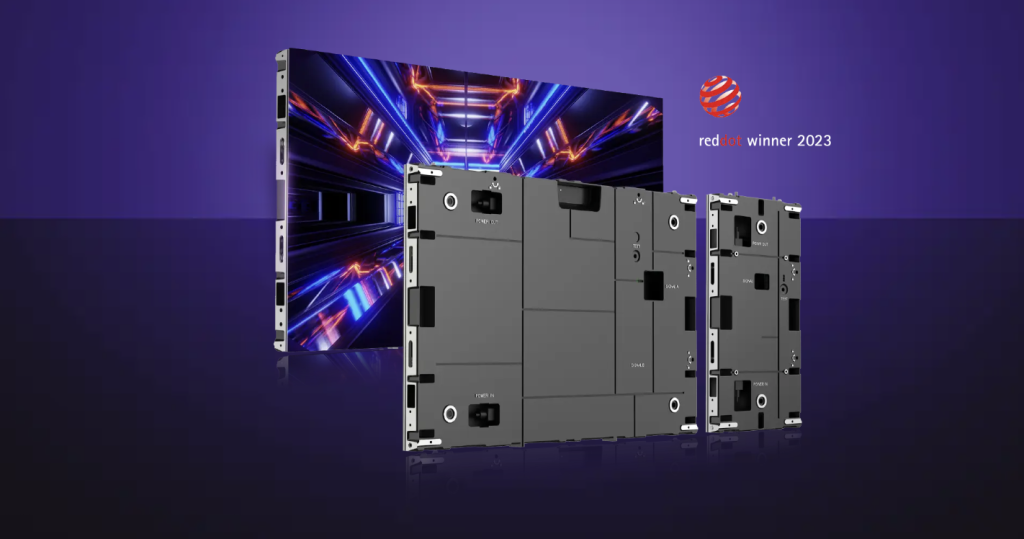
Flexible LED screens give content teams more control over the visual surface. The screen is opaque, so colors can feel richer and the image can be more predictable.
According to the U.S. Department of Energy, LED technology has reshaped lighting and display expectations by improving efficiency compared with older technologies. But efficiency alone does not decide the right retail display. Visibility, content quality, and installation fit matter just as much.
A Simple Decision Guide
Use transparent film when the window must remain visually open and the content is simple.
Use flexible LED screens when the display needs stronger image quality, curved form, closer viewing, or a more permanent branded feature.
Use standard flat LED when the wall is flat, the content is direct, and the project does not need a special shape.
Do Not Let the Glass Decide Everything
The biggest mistake is choosing transparent film just because glass exists. A storefront window is not always the best media surface. Sometimes the stronger retail moment is just inside the entrance: a wrapped column, a curved campaign wall, or a corner display visible from the street.
For retailers exploring those interior creative display options, the BIM Plus-X indoor fixed LED screen is a relevant product page to compare against transparent film concepts.
The right storefront display should serve the shopper’s view, not the novelty of the material.
